


Fact Sheet - National Tracing Center

Fast Facts
ATF’s National Tracing Center (NTC) is the United States’ only crime gun tracing facility.
The NTC is authorized to trace firearms by the Gun Control Act of 1968.
The NTC is only authorized to trace a firearm for a law enforcement agency involved in a bona fide criminal investigation.
The National Tracing Center (NTC) traces firearms associated with crimes and provides investigative leads for local, state, federal, tribal and foreign law enforcement agencies. NTC uses leading-edge technologies and tools such as eTrace to detect firearms trafficking and trace the movement of crime guns across police jurisdictions, state lines and international borders.
Each year, ATF processes firearm trace requests for thousands of domestic and international law enforcement agencies. ATF also assists foreign law enforcement agencies by tracing U.S.-sourced firearms recovered in their countries.
The Numbers
|
|
|
|


Tracing Process
Firearm tracing begins when a law enforcement agency recovers a firearm during an investigation and wants to determine how the possessor obtained the crime gun. NTC receives the trace request and uses the firearm’s markings to identify its original manufacturer or importer. From there, NTC can trace the firearm through the wholesale and retail distribution chain to the last known retail purchaser.
Trace information can identify possible suspects or traffickers and link them to firearms found in criminal investigations. Firearms tracing can also help detect domestic and international trafficking patterns and identify local trends in the sources and types of crime guns.
Obliterated Serial Numbers
Through the Obliterated Serial Number Program, the NTC uses forensic expertise and technology to identify recovered crime guns whose origins have been masked by serial number destruction or alteration. This data helps to detect, deter and disrupt firearms trafficking patterns and related crimes.
 Record Searches
When a trace involves an active federal firearms licensee (FFL), NTC works with them to search their records for the serial number in question. Many large manufacturers, importers and wholesalers voluntarily participate in the free NTC Connect program. NTC Connect provides a secure, web-based application through which the NTC can query by serial number only against an FFL’s electronic firearm disposition records and retrieve the corresponding disposition data. The data remains in custody of the FFL and is not maintained at ATF.
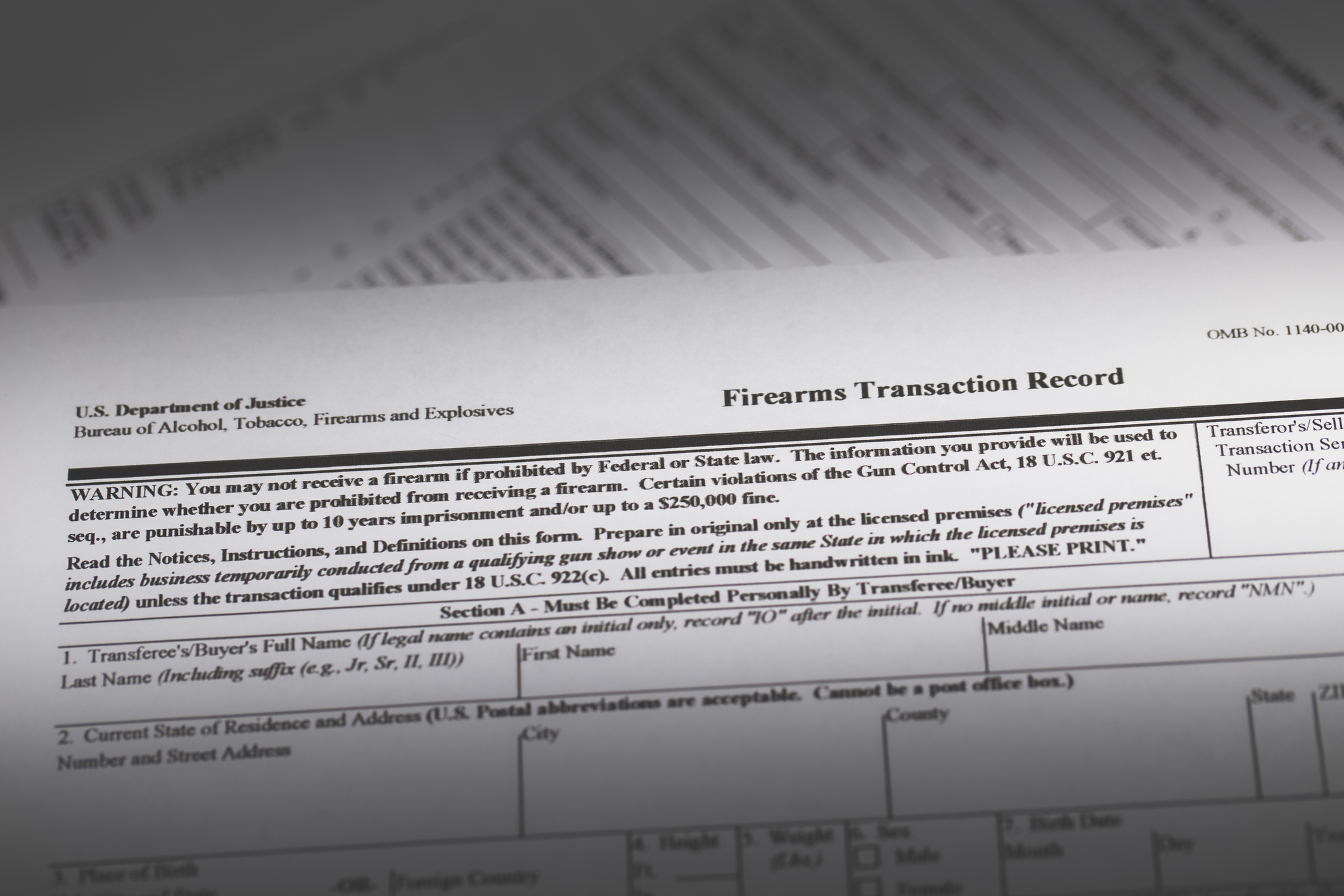
However, many trace requests involve licensees that are no longer operating. Pursuant to the Gun Control Act, FFLs discontinuing their business are required to send their firearms transaction records to NTC within 30 days. NTC safely stores these records in its Out-of-Business Records Repository to complete future trace requests.
Lost or Stolen Firearms
ATF’s mission includes locating lost or stolen firearms before they are trafficked onward or used in a crime. For this reason, FFLs are legally required to report theft or inventory loss to ATF within 48 hours of the incident. NTC analyzes those theft/loss reports and shares with local law enforcement to track criminal activity, develop investigative leads, and recover the firearms. NTC also investigates reports of firearms that are lost or stolen during shipping or transport between states.
Multiple Sales
FFLs are required to inform ATF if they sell two or more handguns to the same buyer within 5 consecutive business days. These multiple sales reports, when cross-referenced with crime gun trace information, help NTC uncover illegal firearms trafficking and other criminal activity.
 Combating Violent Crime
Each year thousands of firearms are reported lost or stolen, and many are used in violent crimes. In the past, this posed a challenge for law enforcement because they did not have access to a single, accredited resource to help them identify historical data about various firearms. Using technology such as eTrace, the NTC can track down crime gun origins, which is then used to develop the links that help lead to the prosecution of violent offenders much faster than previously possible.
Additional Resources
- www.facebook.com/hqatf
- www.twitter.com/atfhq
- www.instagram.com/atfhq

Bureau of Alcohol, Tobacco, Firearms
and Explosives
www.atf.gov