



In July 2016, ATF launched its Crime Gun Intelligence Centers (CGICs) to collect, analyze and share critical intelligence on crime guns, mass shootings, and high-profile incidents across the country and internationally. Leveraging this advanced technology, CGICs play a crucial role to disrupt the violent crime cycle, supporting tribal, local, state, and federal law enforcement partners.
What Do CGICs Do?
- Rapidly identify shooters
- Use ballistic evidence from crime scenes to link firearms and suspects
- Disrupt illegal firearms trafficking networks
- Reduce gun violence through targeted enforcement
Two main components of crime gun intelligence are the National Integrated Ballistic Information Network (NIBIN) and eTrace. Click on the cards below to learn more.

Types of CGICs
There are 25 ATF CGICs located across the country. Each is staffed by a team of ATF special agents, industry operations investigators, local and state law enforcement agencies, forensic experts, and intelligence analysts. They work closely with prosecutors to combat violent gun crime. CGICs support all law enforcement agencies within their region and assist agencies outside their area when there's a lead from NIBIN or eTrace.
HIDTA CGICs utilize ATF's crime gun intelligence capabilities including, but not limited to, NIBIN leads and eTrace data.
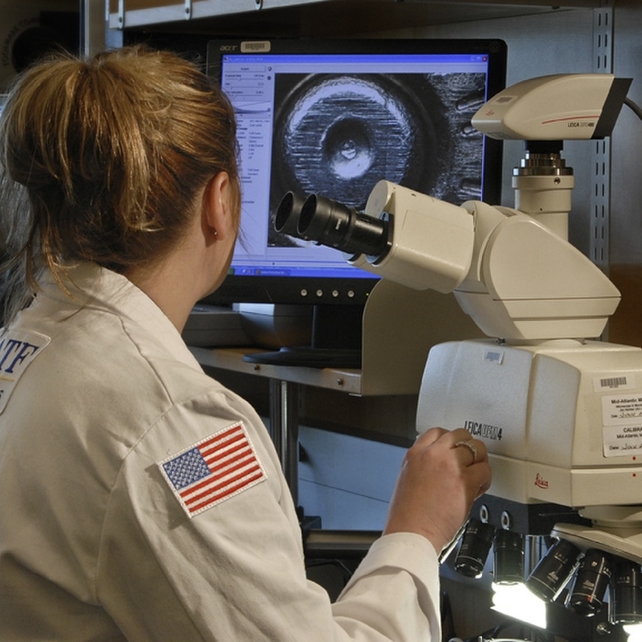
Standalone CGICs vary in size and function, depending on the agency’s resources. They focus on their jurisdiction through the utilization of a BRASSTRAX machine, a machine that automates high-definition 3D imaging of cartridge cases, onsite or in a forensic laboratory that services the department.
A consortium/regional CGIC is a group made up of two or more law enforcement agencies that work together. Typically, a BRASSTRAX machine or a forensic laboratory are shared and where all NIBIN leads are investigated by the group.
A joint CGIC is a partnership between ATF and representatives from territorial, local, state and/or tribal law enforcement agencies. It can vary in size and personnel but is considered a joint effort—investigators and analysts share space and mutually follow up on NIBIN leads.
CGI Training
ATF works with law enforcement agencies to organize and customize comprehensive training including:
- CGI scenario training
- Introduction to NIBIN
- Introduction to CGI
- NESS application user training
- Reauthorizing NIBIN users
In-person, virtual and multi-day training opportunities are available. Departments and agencies interested in training can email FOD_CGIC@atf.gov.
ATF CGIC Certification
When a CGIC establishes and adheres to standardized practices that support the use of the “Four Critical Steps for a Successful NIBIN Program” within their area of responsibility (AOR), they can enroll in and be awarded a CGIC certification.
With the vast differences between AORs, each CGIC is likely to have unique perspectives, practices, and processes. Through the CGIC certification process, ATF learns the various strategies local CGICs use to overcome challenges unique to their AOR. Documenting these unique experiences allows ATF to assist other territorial, local, state and tribal law enforcement agencies establish and operate their CGICs.
Upon certification, that CGIC will be added to a nationwide CGIC email distribution list where ATF showcases success stories, highlight software and technologies, and provide direct updates to the program. The CGIC will also receive an official certificate for display.
Email CGICCERT@atf.gov to enroll in the ATF CGIC certification program.
