



NCETR Week in Review: National demand for ATF explosives training remains high as NCETR hosts dozens of public safety professionals
Experts deliver hands-on instruction to help combat arson, bombings, and emerging explosive threats
HUNTSVILLE, Ala. – This week, experts from the Bureau of Alcohol, Tobacco, Firearms and Explosives provided advanced training to dozens of fire investigators, law enforcement officers, prosecutors, bomb technicians, military explosive ordnance disposal operators and other public safety professionals at ATF's National Center for Explosives Training and Research.
Students traveled from across the United States to participate in specialized courses designed to strengthen the nation's ability to prevent, investigate and respond to arson, explosives incidents, and emerging threats involving homemade explosives.
"The true measure of our success at NCETR is what happens after students leave our classrooms," said Brice McCracken, Special Agent in Charge of NCETR. "Every course is designed to provide public safety professionals with practical, real-world skills they can immediately apply to safeguard their communities. In an increasingly complex threat environment, our training remains in high demand because of the expertise of our instructors and our commitment to delivering realistic, mission-focused training that prepares our partners to meet real-world challenges."
Located on Redstone Arsenal in Huntsville, Alabama, NCETR serves as ATF's national hub for explosives science, research, intelligence, and training. Each year, the facility provides cutting-edge instruction to thousands of public safety professionals responsible for protecting communities from explosive violence, bomb threats, suspicious devices, and intentionally set fires.
The courses combine classroom instruction with hands-on exercises that place students in realistic operational scenarios, allowing them to apply investigative techniques, evidence collection methods, and explosives-disposal procedures in controlled training environments.
NCETR instructors include ATF Special Agents, Certified Fire Investigators, explosives enforcement officers, forensic experts, and technical specialists with decades of experience investigating bombings, arsons, explosives trafficking, and other violent crimes. Their expertise supports federal, state, local, tribal, and international partners tasked with protecting lives and critical infrastructure.
In addition to supporting criminal investigations, NCETR's training programs help strengthen partnerships across the public safety community by bringing together professionals from multiple disciplines to share best practices and build relationships that can be leveraged during real-world incidents.
As threats involving explosives and incendiary devices continue to evolve, demand for specialized training remains strong. The courses offered at NCETR provide students with the tools, knowledge, and practical experience necessary to identify hazards, investigate incidents, safely mitigate threats, and successfully support criminal prosecutions.
NCETR courses for this week included:
- Advanced Explosives Disposal Techniques
This advanced course provided comprehensive classroom and range instruction covering explosives identification, disposal techniques, blast effects, evidence preservation, and operational safety considerations for approximately 30 bomb technicians and explosives professionals.
- Homemade Explosives
More than 20 students received specialized instruction on identifying precursor chemicals, manufacturing equipment, and production techniques associated with homemade explosives. The course also addresses safe handling procedures, threat assessment, mitigation measures, and disposal methods for hazardous mixtures frequently encountered during criminal investigations.
- Arson and Explosives Investigation for Prosecutors
This course equipped nearly 20 prosecutors with a stronger understanding of fire-scene examination, origin-and-cause determinations, explosives evidence, expert testimony, and courtroom considerations related to arson and explosives cases. The training helps prosecutors build stronger cases and effectively present complex forensic evidence during criminal trial proceedings.
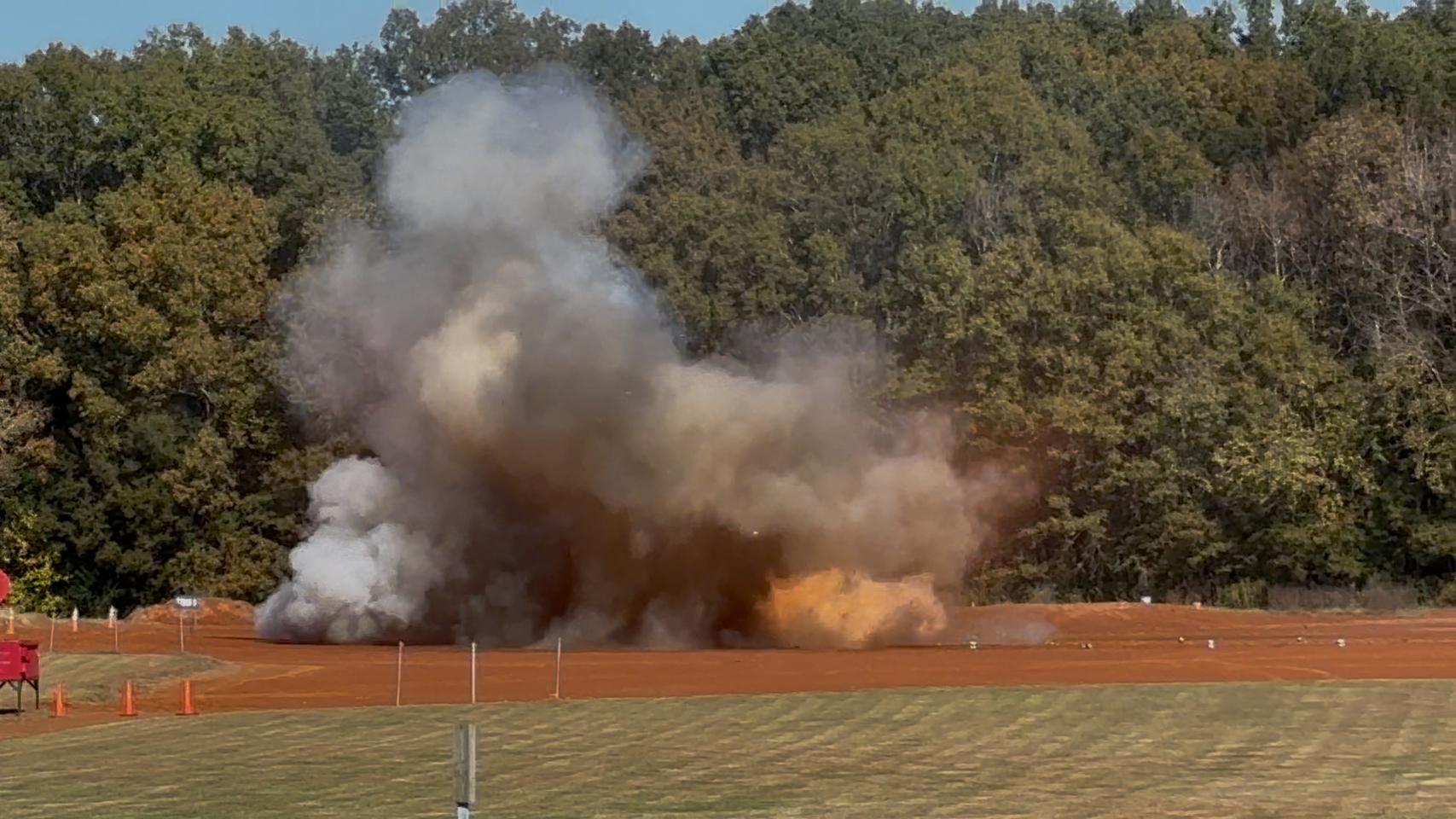
ATF personnel dispose of approximately 80 pounds of homemade explosives during the final training exercise of the ATF Homemade Explosives course at the National Center for Explosives Training and Research (NCETR) on Redstone Arsenal in Huntsville, Alabama. The explosives were countercharged with commercial explosives and delay detonators as students applied the techniques and safety procedures taught throughout the course.
Agencies interested in partnering with ATF’s NCETR should contact NCETR-Mailbox@atf.gov.
###
ATF protects American communities from violent crime driven by the illegal use of firearms, explosives, and acts of arson. Through crime gun intelligence, forensic analysis, and relentless investigation, we identify and arrest violent offenders and gang members, dismantle trafficking networks, and sever the supply chains arming cartels, prohibited persons, and terrorist organizations. We defend the rights of law-abiding citizens by safeguarding lawful commerce and upholding the Constitution of the United States. Learn more about what ATF is doing to reduce violent crime in your community by following us on X @ATFHQ, Instagram @ATFHQ, LinkedIn @ATF, and Facebook @HQATF, or on the web at www.atf.gov.
