


On April 15, 2013, the Boston Marathon bombing, carried out by brothers Tamerlan and Dzhokhar Tsarnaev, claimed three lives and injured hundreds. The Bureau of Alcohol, Tobacco, Firearms and Explosives played a critical role in the investigation, leveraging its expertise in explosives and firearms to support the immediate response, evidence collection, and subsequent manhunt.
At 2:49 p.m., as thousands of runners neared the finish line on Boylston Street, the self-radicalized Tsarnaev brothers triggered two bombs packed with shrapnel, including nails and ball bearings.
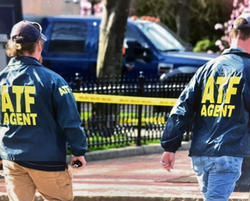
“The ATF brought unmatched expertise in post-blast investigation and explosives tracing to the Boston Marathon bombing case,” said ATF Boston Field Division Special Agent in Charge James M. Ferguson. “Within hours, our agents were on scene recovering critical components of the pressure cooker bombs, and our certified explosives specialists played a key role in reconstructing the devices.”
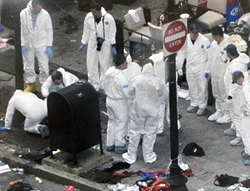
More than 100 ATF agents and specialists were on Boylston Street, meticulously collecting bomb fragments to reconstruct the devices. Their deep knowledge of explosives from prior cases and research was essential in analyzing the bombs’ composition.
On April 18, after the FBI released the suspects images, the Tsarnaevs killed MIT Police Officer Sean Collier, who was sitting in his cruiser on the school’s campus. The terrorist brothers then carjacked a vehicle and kidnapped its driver. They forced their victim to drive them to a gas station, where he escaped and called 911. The vehicle’s tracking system led law enforcement to Watertown, where the brothers engaged in a firefight with law enforcement, throwing improvised explosive devices at the officers. Tamerlan was killed, but Dzhokhar fled in the stolen SUV, abandoning it within half a mile.
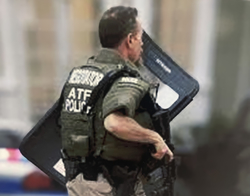
On April 19, a 911 call led law enforcement, including ATF Special Agents, local SWAT, and K-9 units to 67 Franklin Street, where Dzhokhar was found hiding in a boat. ATF was also able to trace the firearm used by Tamerlan, which strengthened the investigation and identified the brothers.
For nine days, ATF personnel, including explosive detection K-9 teams, collaborated with the FBI’s Boston Evidence Response Team, Boston Police Department, and Massachusetts State Police to process a 12-square-block crime scene. They handled more than 3,500 pieces of evidence.
“ATF’s deep institutional knowledge of homemade explosives, device signatures, and forensic analysis was instrumental in helping to identify the materials used, determine the construction methods, and support the broader investigative effort led by the FBI and our local partners,” stated Ferguson.
The effort highlighted ATF’s ability to manage complex, large-scale investigations with contributions that went beyond evidence and pursuit. Their explosives and firearms expertise, combined with investigative expertise, made them an essential partner in the FBI-led effort. Their work piecing together clues from the destruction was critical to one of the largest U.S. terrorist investigations since 9/11.
Through relentless effort, specialized expertise, and seamless collaboration, ATF was instrumental in identifying and apprehending the Boston Marathon bombers. Their behind-the-scenes contributions highlight ATF’s vital role in addressing horrendous acts of violence.
In April 2015, a jury convicted Dzhokhar Tsarnaev on all 30 counts of the indictment including use of a weapon of mass destruction and murder. In June 2015, he was sentenced to death.
###
